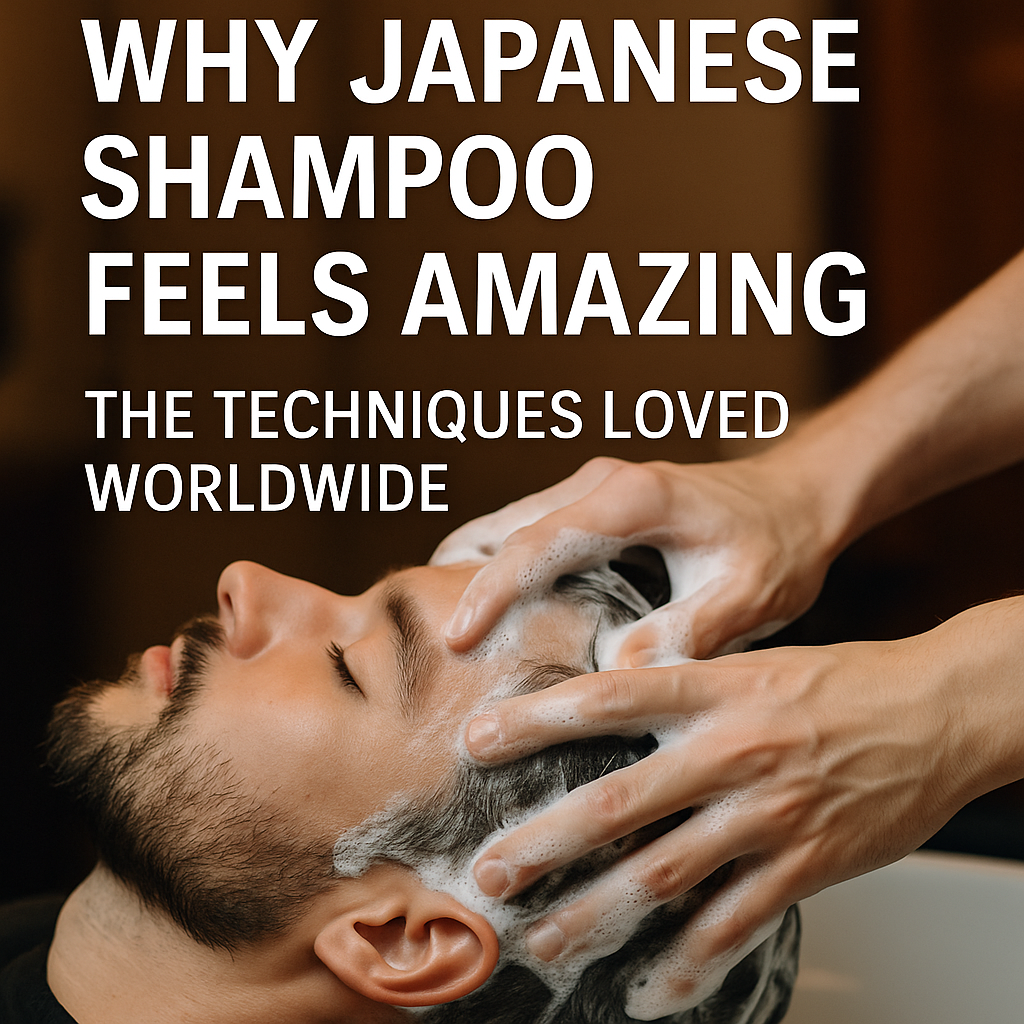
Quick answer: Yes — the shampoo really is that good, and no, you’re not imagining it. It’s treated as part of the service rather than a rinse before the cut, and you’re allowed to direct it. Most visitors don’t know that last part.
“Why is shampooing in Japan so relaxing?”
I get asked this almost more than anything about the actual haircut. People come in for a fade and leave talking about the sink.
Here’s what’s actually going on, from someone who does it all day.
It’s Not a Washing Step — It’s Part of the Service
That’s the core difference. In a lot of countries, shampoo is the thing that happens so the cut can happen. In Japan it’s treated as its own experience — closer to washing, massage and finishing rolled into one.
Which means the time spent on it isn’t wasted time. It’s the point.
Three Things That Make the Difference
① The whole finger pad, not the fingertips
We wash with the soft pads of the fingers and move the scalp rather than scrubbing the surface of the hair. That’s why it feels like a massage instead of a wash — the skin is actually moving.
② Pressure control
Never too strong, never too weak, and adjusted as we go. There are points on the scalp where the right pressure feels genuinely good, and finding them is trained skill, not luck.
This is why so many people fall asleep at the sink. If that happens to you, nobody minds — honestly, we take it as a compliment.
③ Obsessive rinsing
The neckline, behind the ears, the hairline. Rinsing takes longer than visitors expect because leaving product behind is considered a failure, not a detail.
Several people have told me it’s the first time they’ve left a salon without that faint tight feeling on the scalp.
What Actually Happens (So Nothing Surprises You)
- It’s usually included. At a traditional barbershop, shampoo is part of the standard price, not an add-on.
- It often happens twice — once before the cut and once after, to clear away the cut hair.
- You’ll lie back at a sink (or occasionally lean forward, depending on the shop’s equipment).
- A towel or light cloth may be placed over your face. That’s for splash protection, not something strange. You can say no.
- Towel-drying often includes a light massage too. That part isn’t accidental.
You Can Direct It — Almost Nobody Does
This is the practical part most visitors miss. The shampoo is adjustable, and saying so makes it better:
- “You can apply strong pressure.”
- “Soft pressure, please.”
- “Warm water is OK.” / “A little cooler, please.”
- “Please take your time.” — completely acceptable to say
- “No shampoo today, thank you.” — also fine, no explanation needed
Water temperature in particular is worth mentioning. What’s comfortable varies a lot between people, and we’d rather adjust than have you endure it politely.
Why It Ended Up This Way
The underlying idea is omotenashi — hospitality where the guest’s comfort is the actual product, not a bonus attached to it.
In practice that turns into small things: checking the water temperature before it touches you, the way the towel is placed, keeping the room quiet, not rushing the rinse. None of it is dramatic. Together it’s the reason people remember the shampoo more than the haircut.
It also connects to why the shop is quiet in the first place — the same thinking runs through the whole visit.
What I Personally Focus On
Since people ask: the things I’m actually thinking about while washing someone’s hair are
- how the scalp moves under my fingers
- keeping the finger angle consistent
- changing pressure at the right moment, not constantly
- building fine, dense foam before touching the scalp
- spending longer on the rinse than feels necessary
- going gently around the ears
- keeping the water flow rhythmic — it sounds small, but the sound matters
None of these are secrets. They’re just habits that took years to become automatic.
One Honest Caveat
The overall standard in Japan is high, but it isn’t universal. Very cheap chains and shops without proper shampoo facilities offer a much more basic version — sometimes none at all.
As a rough guide, shops in the ¥4,000+ range almost always include a proper shampoo. If the experience is what you’re after, that’s the range to look in. (Full price breakdown here.)
Summary
- ✔ Shampoo is treated as part of the experience, not a preparation step
- ✔ Finger pads, pressure control, and long rinsing are the three differences
- ✔ It’s usually included, and often done twice
- ✔ You can ask for stronger, softer, or cooler — please do
- ✔ Falling asleep is normal and slightly flattering
If you only try one thing at a Japanese barbershop, most visitors would tell you to make it this.
Let’s BARBER!! 💈
Related Guides
👉 First Time at a Japanese Barber Shop: What to Expect
👉 What a Japanese Face Shave Is Actually Like
👉 10 Must-Know Japanese Barber Phrases

Comments